All posts · 9 min read
Head to Head Puzzle Game Examples: Logic and Spatial Play
Explore head to head puzzle game formats, compare logic, visual, and spatial challenges, and find the right two-player duel to test your skills with a friend.
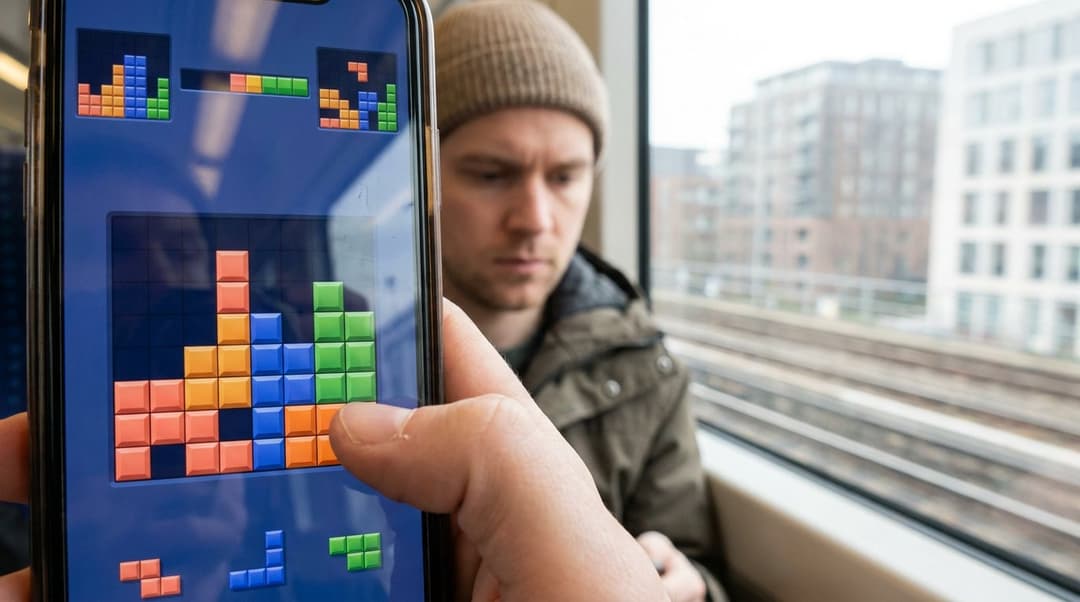
Fast hands don’t always win. In a head to head puzzle game, players compete by solving puzzles where planning, pattern-spotting, and smart moves can matter as much as speed. The challenge depends on the game, but the contest is direct: solve, place, or match pieces while your opponent tries to outplay you.
That mix makes puzzle duels appealing. You get the satisfaction of cracking a challenge, along with the pressure of knowing someone else is making moves too. Logic, visual, and spatial puzzles test different skills, so the best fit depends on how you like to think.
This guide explains how head-to-head puzzle play works and compares logic, visual, and spatial challenges. You’ll see what each type asks you to do, where the competitive tension comes from, and which style may suit you. Then pick your kind of challenge and bring a friend into a duel.
Key Takeaways
- Learn how direct competition changes a puzzle: each player solves a challenge while keeping pace with an opponent.
- Tell logic puzzles apart from visual and spatial ones by the skills each asks you to use.
- Choose a two-player puzzle format based on whether you prefer deduction, pattern-spotting, or arranging pieces.
- See how Combo Rivals: Block Puzzle turns block-puzzle play into live or anytime 1v1 friend duels with voice.
Table of Contents
- Game objective and mechanics
- Puzzle games
- Visual and spatial puzzles
- What are the best head-to-head puzzle games for two players?
- Combo Rival: Combo Rivals: Block Puzzle (free mobile game)
Game objective and mechanics
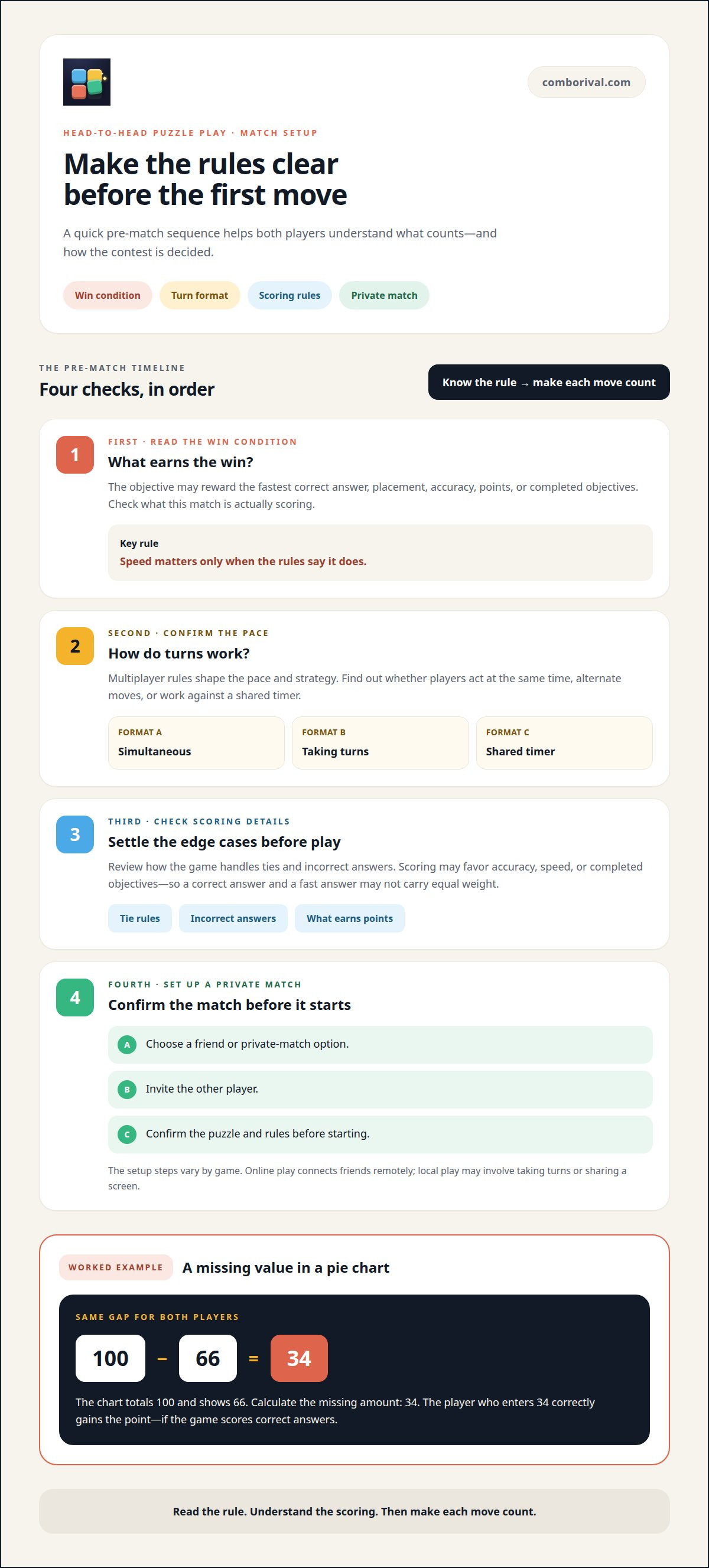
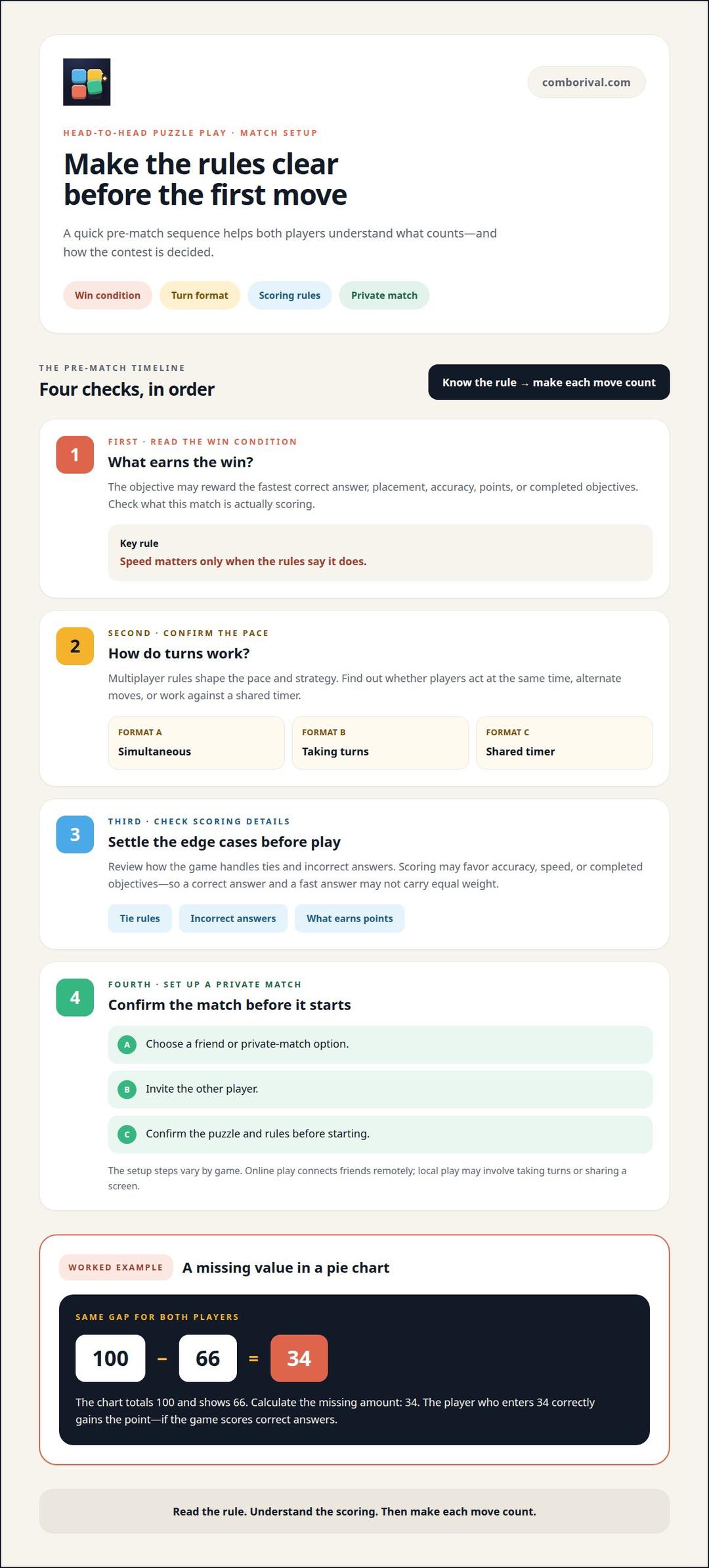
Two players face the same challenge and compete to solve it, score, or finish first. The objective depends on the format. One match may reward the fastest correct answer; another may prioritize placement, accuracy, or points. Read the win condition first. Speed matters only when the rules say it does.
Consider a pie-chart puzzle with one missing value. The chart totals 100, and its visible value is 66. Subtract 66 from 100 to get 34. Situation: both players face the same gap. Action: calculate the missing amount. Result: the player who enters 34 correctly gains the point, if the game scores correct answers.
In a head to head puzzle game, multiplayer rules shape the pace and strategy. Some games use simultaneous turns, while others alternate moves or set a shared timer. Scoring may favor accuracy, speed, or completed objectives, so learn the rules before you start.
Can you play puzzle games online with friends or locally on one device? Yes, if the game supports those modes. Online play connects friends remotely; local play may let players take turns or share a screen.
How do skill levels, matchmaking, and rankings work in competitive puzzle games? Matchmaking may group players based on results, while rankings track performance across matches. The game’s scoring rules determine which results count.
How do you set up a private head-to-head puzzle match? Choose a friend or private-match option, invite the other player, then confirm the puzzle and rules before starting. The steps vary by game.
Use this quick sequence before competing:
- Check whether the match rewards speed, accuracy, or both.
- Confirm whether players solve together or take turns.
- Review how the game handles ties and incorrect answers.
- For a private match, select the friend-play option and follow its invite flow.
That setup makes the result easier to understand. In a head to head puzzle game, a correct answer and a fast answer may not carry equal weight. If the game uses a timer, pace becomes part of the contest. Learn the rule, then make each move count.
Puzzle games
A head to head puzzle game turns a familiar task into a direct test of focus. One player might solve a number riddle while another spots a word pattern or matches tiles. Choose a format where both players face the same kind of challenge, then compare accuracy, completion, or pace according to the rules.
Try a student-ranking puzzle. Alex stands 9th from the top and 38th from the bottom. Situation: players must find the total number of students. Action: add both positions, then subtract Alex once because he appears in both counts. Result: the group has 46 students. In a head to head puzzle game, this example rewards careful reading as well as arithmetic.
Short rounds work well for a quick break or family play. A simple sequence puzzle gives everyone the same clear task: identify what comes next. For mixed ages, choose rules you can explain before play starts, so players can focus on solving rather than learning a complex scoring system.
Platform availability depends on the game. Some puzzle games are released for iOS or Android, while others support PC or consoles. Choose a title that works on the device each player plans to use.
For children, in-app purchases can lead to unintended spending, and open chat can bring unwanted messages or requests for personal details. Review purchase controls and chat settings before play. Keep private information private.
- For a quick round: choose a short sequence or matching puzzle.
- For family play: pick a visible goal and simple scoring.
- For device choice: match the game’s supported platform to each player’s device.
- For children: set purchase boundaries and review chat options.
A shared puzzle works best when everyone understands the goal. Pick a task, agree on how to score it, and let the next answer settle the friendly rivalry.
Visual and spatial puzzles
Visual puzzles put shape, position, and pattern in play. A player might mentally rotate a piece, match a silhouette, or spot the missing tile. Spatial challenges add depth: the same object can look different from another angle. In a duel, both players face the same layout, but each must read it quickly and choose a useful move.
Take a cube-counting puzzle. Situation: a stepped stack has three layers, with 5 cubes on the bottom, 3 above, and 1 on top. Action: count each layer once, then add 5, 3, and 1. Result: the stack contains 9 cubes. A quick scan can miss a hidden cube, so compare visible faces with the structure of the stack.
That example tests more than addition. Players must separate the picture into layers, track which cubes support others, and avoid counting one cube twice. In a competitive round, a clear method beats a rushed guess. Start with the base, move upward, and keep a running total. If the top layer has 1 cube, account for it once.
- For rotation: turn a shape mentally before matching its outline.
- For a grid: scan rows and columns for the open space.
- For a block layout: check fit before placing a piece.
- For a shadow puzzle: compare the silhouette with likely object angles.
In a block-placement duel, players face a board with open cells and pieces to place. Inspect the gaps, rotate or position each piece when allowed, then place it where it fits. The result should be a stronger board with fewer awkward spaces. A move that looks good now can cause trouble later, so consider the next opening too.
Use a repeatable check: find the largest open area, test the piece’s footprint, then place it. In a shared visual challenge, both players work from the same image. The winner may be the one who identifies the pattern first, not the one who taps fastest. This keeps spatial play focused on clear, skill-based decisions.
What are the best head-to-head puzzle games for two players?
The best pick depends on what both players want to test. For quick rounds, choose a single-board challenge with a clear goal. For deeper rivalry, choose a puzzle where each move changes later options. A word duel rewards recall; a matching game rewards pattern recognition. A block-placement contest tests planning and spatial judgment.
Situation: two friends want a short match between activities. Action: pick a single puzzle, such as matching shapes or completing a simple sequence. Result: both players focus on one clear task, then compare accuracy or completion time. For family play, favor visible rules and answers that don’t rely on specialist knowledge.
A strategy-minded pair may prefer a shared board. Situation: each player places pieces into open spaces. Action: look for the best fit while keeping future gaps usable. Result: every placement affects the next choice, so planning matters more than tapping at random. This format suits players who enjoy weighing options, not just spotting a quick answer.
Use these checks to narrow the choice:
- For deduction: pick number or logic puzzles with one defensible solution.
- For quick pattern reads: try matching, sequence, or visual-search challenges.
- For tactical play: choose a grid where each placement changes available space.
- For casual rivalry: look for friend matches that support live or anytime play.
Situation: one player likes logic, while the other prefers visual play. Action: alternate formats across matches, then compare which rules both enjoy. Result: variety keeps the contest balanced without forcing either player to rely on a single strength. A good two-player puzzle makes the objective clear and gives both players meaningful choices.
Prefer a direct block-placement duel? Try a block-puzzle match with a friend and put your next move to the test.
Combo Rival: Combo Rivals: Block Puzzle (free mobile game)
Combo Rival offers Combo Rivals: Block Puzzle, a free mobile game for players who want block-puzzle competition. Friend duels let you play live or anytime 1v1 matches with voice. That makes it a fit when you want a direct puzzle contest with someone you know, rather than a solo logic challenge.
For a different pace, try the Daily puzzle challenge. The Season Pass offers free and premium tracks. Choose the mode that fits your mood: challenge a friend, take on the daily puzzle, or progress through the pass.
If block puzzles sound like your kind of rivalry, contact Combo Rival to learn more.
Choose your next challenge
Make your next match about more than winning. Pick one skill to sharpen, such as spotting a pattern before your opponent or choosing a smarter placement under pressure. Then play again with that focus. A head-to-head puzzle game is more rewarding when each round gives you a fresh way to test your decisions, not just your reaction speed.
Keep the rivalry friendly and the goal clear. Agree on what makes a strong round before you start, then enjoy the close calls, clever moves, and rematches that follow. Your preferred puzzle style can change with your mood, so stay open to trying a different kind of challenge.
Ready to take the next step? Contact Combo Rival about puzzle games and find a puzzle challenge that fits your next match. Bring your focus, invite a friend, and let the next move speak for itself.
Frequently Asked Questions
What is a head-to-head puzzle game?
It’s a puzzle game where players compete directly rather than solving only for a personal score. For example, in a visual sequence challenge, each player studies the same pattern and selects the missing piece. The game’s rules determine whether accuracy, completion, or another result decides the winner.
Which head-to-head puzzle games are free, and what do paid versions cost?
Combo Rivals: Block Puzzle is free to play, with optional in-app purchases rather than a single paid version. Options include a premium Season Pass track, cosmetic customizations, coin packs, and booster packs. These are separate purchases, so there isn’t one price for a paid version of the game. You can start playing without buying extras.