All posts · 7 min read
Same Pieces Puzzle Duel Format and Winning Strategies
Master the same pieces puzzle duel with practical board-scanning, placement, and planning strategies that keep options open and help you outplay a friend.
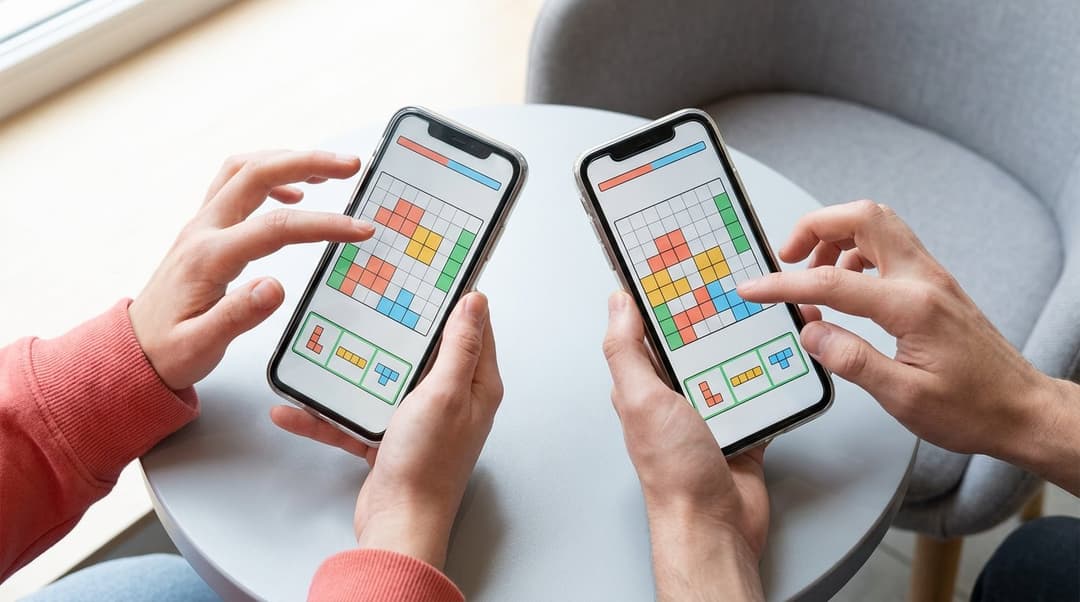
Same pieces, different choices. In a same pieces puzzle duel, both players face the same puzzle and pieces, so smart placement and quick decisions matter more than getting an easier board.
That shared setup makes the contest fair, but it doesn’t guarantee a win. One rushed move can box you in; a little planning can keep your options open.
Learn how the two-player format works and what to focus on as you play. Read the board, place pieces with purpose, and avoid moves that leave you stuck. These clear tactics are ready to use in your next duel.
Key Takeaways
- Understand how matching pieces create a fair, head-to-head test of decision-making.
- Learn what to scan on the board before committing to a placement.
- Use flexible moves to keep more options open as space gets tight.
- See how live and anytime friend duels bring the format into a two-player block puzzle match.
Table of Contents
- How to win a duel
- Two-player puzzle duel format
- Combo Rival: Friend duels: live and anytime 1v1 block puzzle matches with voice
How to win a duel
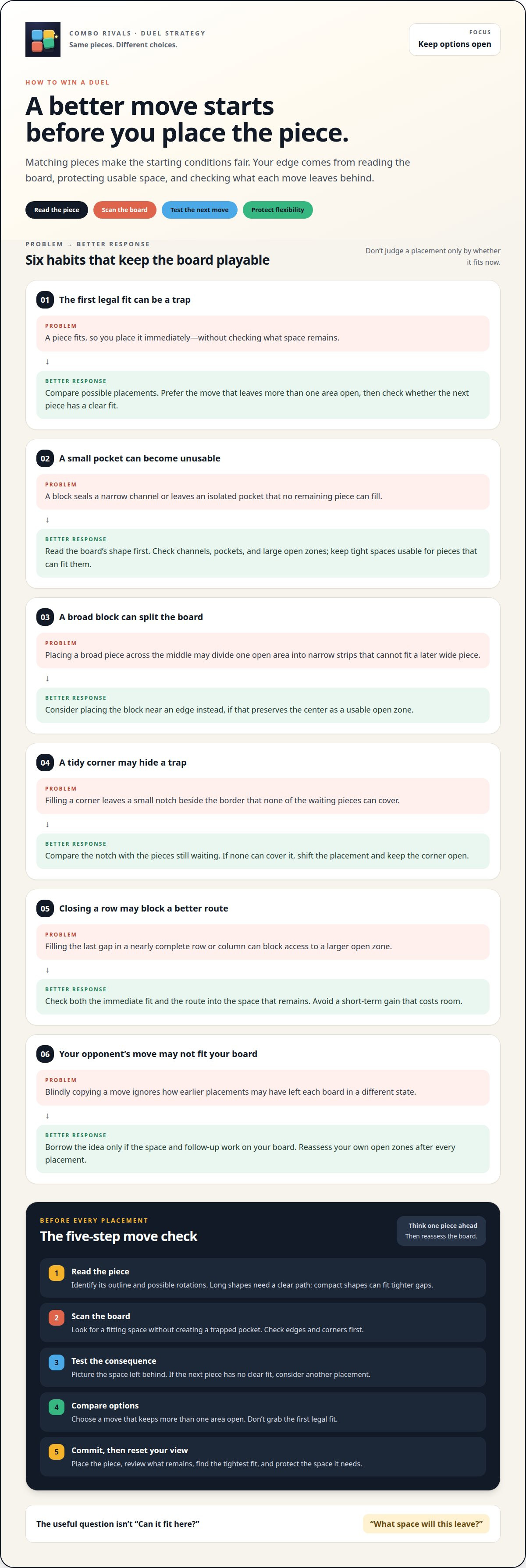
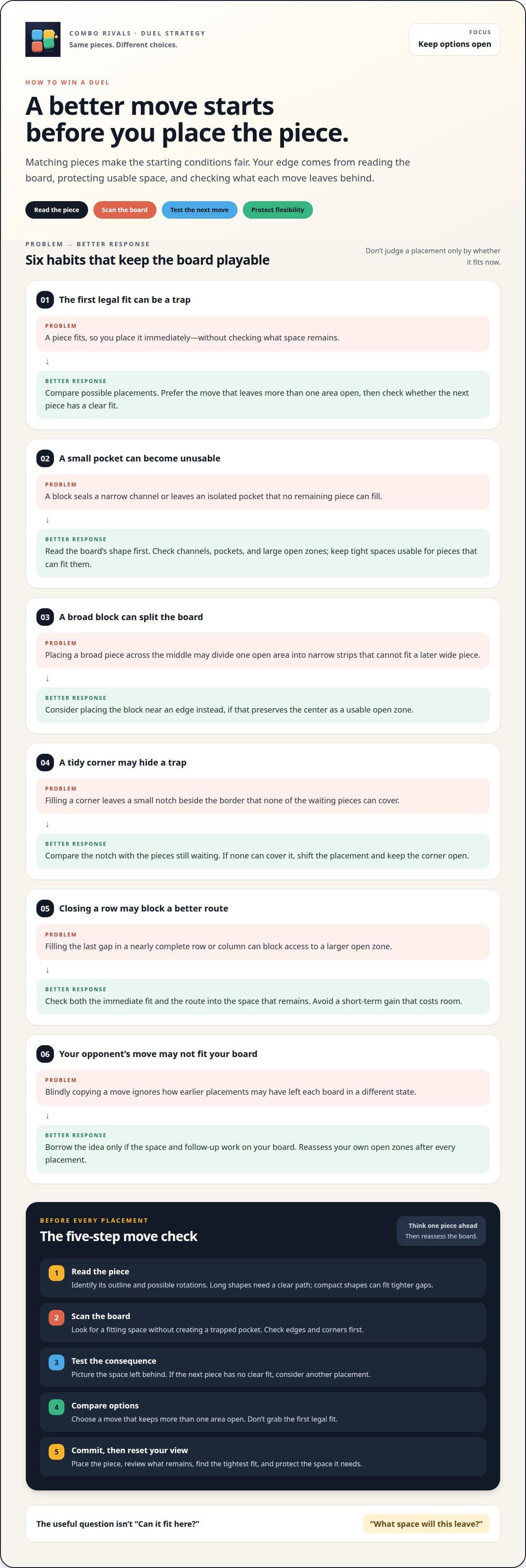
Matching pieces give both players the same puzzle conditions. Your advantage comes from what you notice and where you place each block. Scan the board before committing: a move that fits now can still close off space needed for a later piece.
Start with the board’s shape, not the first open gap. Look for narrow channels, isolated pockets, and large empty zones. A block that seals a channel, for example, may leave a pocket too small for any remaining piece. Keep those spaces usable.
Use this quick move check before each placement:
- Read the piece. Identify its outline and possible rotations. A long shape needs a clear path; a compact shape can fit tighter gaps.
- Scan the board. Find spaces that match the piece without creating a trapped pocket. Check the edges and corners first.
- Test the consequence. Picture the space left behind. If the next piece has no clear fit, choose another placement.
- Compare options. Look for a move that keeps more than one area open. Don’t grab the first legal fit.
- Commit with a plan. Place the piece, then immediately reassess the board. The next move may change your best route.
Protect flexibility. Several open zones give you more ways to handle awkward shapes. Placing a broad block across the middle, for example, might split one open area into two narrow strips. If a later piece is wide, those strips can become dead space. Placing the block near an edge may preserve the center instead.
Use corners carefully. They look tidy, but a piece can leave a small notch beside the border and turn the corner into a trap. Before filling it, compare the notch with the pieces still waiting. If none can cover it, shift the block and keep the corner open.
Think one piece ahead, not five. Long plans can fail as the board changes, while a simple next-step check catches trouble early. If a piece fits in two places, choose the location that leaves workable space for the next shape. Then reassess rather than forcing an old plan.
Watch for accidental barriers. A nearly complete row or column can tempt you to fill its last gap. But if that placement blocks access to a larger open zone, the short-term gain can cost you room. Check both the immediate fit and the route into the remaining space.
Keep your eyes on the whole board during a same-piece duel. The shared pieces make comparison useful, but blindly copying your opponent’s move can still hurt. Earlier placements may have left their board in a different state. Borrow the idea only if the space and follow-up also work on your board.
When a move feels forced, pause and sweep the board. Check the edges, the largest open space, and any small pockets. A narrow piece may clear a tight gap and preserve the center for a bulky shape. That deliberate scan beats a rushed placement that leaves no clean next move.
After each placement, reset your view. Don’t judge the board by the space you just filled. Look at the pieces still available, spot the tightest fit, and protect the area it needs. This repeatable routine grounds each choice in the board in front of you.
Two-player puzzle duel format
A two-player puzzle duel turns a board challenge into a direct contest. In a same pieces puzzle duel, both players face matching pieces and puzzle conditions. That shared setup removes one obvious advantage: getting an easier set. The score still depends on the game’s rules and each player’s decisions.
Most formats have three parts: a shared challenge, a way to make moves, and a result. The shared challenge creates the comparison. The move system determines whether players act at once or take turns. The result may reflect completion, score, speed, or another stated objective. Read the rules before playing: “finish first” and “score highest” reward different choices.
In a simultaneous format, both players act at once on their own boards, then the game compares progress under its rules. A turn-based format alternates moves. If each player gets one placement before the next turn, planning around the opponent becomes part of the puzzle. The same board can feel very different under these two structures.
Timing also shapes the match. A live duel happens while both players are present; an anytime duel lets each person take a turn at a different moment. A live round can feel like a sprint, while an anytime match gives players more room to pause and consider a placement. Some puzzle duel rounds take under one minute, so quick board reading can matter as much as careful planning.
Before starting, pin down the format’s key rules. Check these details in the game screen or match instructions:
- Starting conditions: Confirm that both players receive the same puzzle or piece sequence.
- Move timing: See whether actions happen simultaneously or in turns.
- Objective: Identify whether the match rewards speed, score, completion, or another goal.
- End point: Learn what ends the round, such as a completed board or a finished timer.
- Result display: Find out how the game shows the winner or compares performance.
Imagine two players receive the same shapes. One quickly fills a large open area; the other keeps it open for a piece that fits better. If the goal is speed, the first move may help. If the goal is a higher score, the second approach could be stronger. The objective defines what counts as the best move.
Matching pieces make comparisons clearer, but they don’t make every board state identical. Earlier placements can leave each player with different open spaces. After a few moves, one player may have a narrow channel while the other still has a broad area. The shared start creates a fair basis for comparison; the decisions create the difference.
That distinction explains why a duel isn’t just a solo puzzle with an audience. The other player gives you a result to chase, while the rules define what counts as winning. Confirm the objective, watch the board, and make choices that fit the format. In a live game, pace matters. In an anytime game, each move can still shift the final comparison.
Combo Rival: Friend duels: live and anytime 1v1 block puzzle matches with voice
Combo Rival gives you a direct way to put these duel strategies into play. Its friend duels offer live and anytime 1v1 block puzzle matches with voice, so you can compete in real time or take turns when schedules don’t line up.
Choose a live match for quick back-and-forth, or an anytime duel when you want more room to think between moves. Either way, you can face a friend, read the board, and make your own calls in Combo Rival: Block Puzzle, a free mobile game with live and anytime friend duels, voice chat, and a daily puzzle challenge for solo play.
Ready to bring a friend into the matchup? Contact Combo Rival.
Make Your Next Move Count
Make your next match a test of judgment, not guesswork. Before placing a piece, decide what you want to preserve: open space, a clear route, or room for a difficult shape. Then adapt as the board changes. This small habit gives every move a purpose and makes a same pieces puzzle duel more rewarding.
Bring a friend into the challenge when you’re ready to put those choices to the test. Pick your pace, trust your read of the board, and keep the rivalry friendly. The fun is seeing how two players handle the same challenge in different ways.
Contact Combo Rival about puzzle duels and set up your next match. Take what you’ve learned into the game, make your calls with confidence, and enjoy the contest.