All posts · Updated · 10 min read
Which asynchronous multiplayer games work for short play sessions?
Find asynchronous multiplayer games for busy people, compare turn deadlines and quick-check-in formats, and choose a game that fits your schedule today.
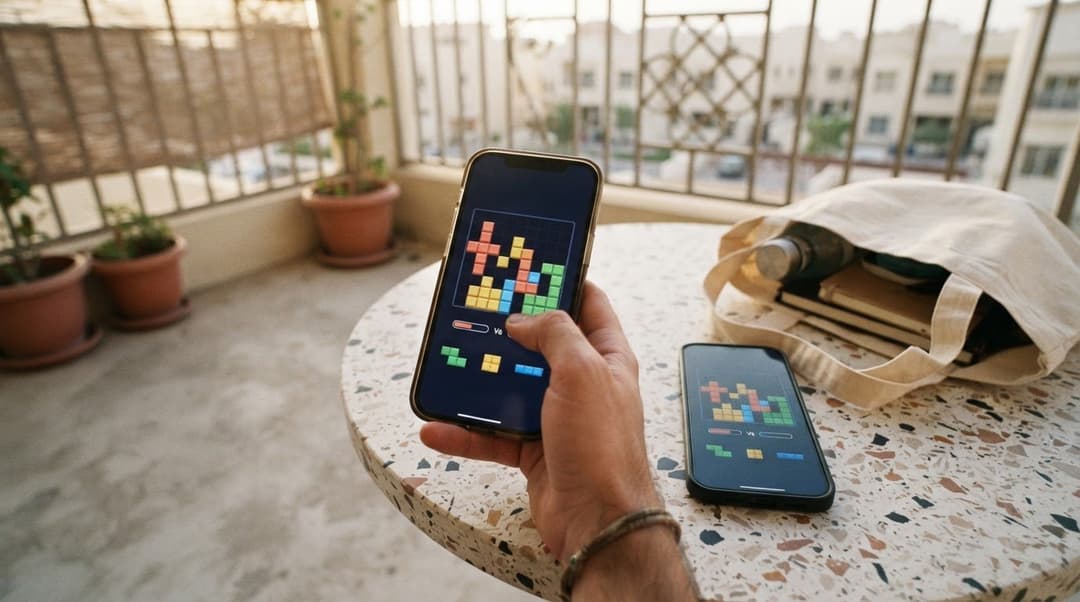
The best asynchronous multiplayer games for busy people let each player take a turn when it suits them, without requiring everyone to be online at once. Turn-based word, strategy, and board games fit this rhythm: make a move, send it to a friend, and return when they respond.
That flexibility protects your schedule, but the pace still needs to work for your group. Clear move deadlines keep matches moving, while longer windows leave room for short check-ins instead of demanding one uninterrupted session.
You’ll learn which game styles suit quick check-ins, how turn limits shape a match, and what happens between moves, so you can choose a format that fits your day, whether you want a thoughtful back-and-forth or a faster challenge with a friend.
Key Takeaways
- Choose turn-based games when you want to play without lining up everyone’s online time.
- Start with one match and a generous deadline, then adjust the pace to suit your group.
- Keep several games moving at once only if your group can track each match’s next turn.
- For block puzzle competition, Combo Rivals: Block Puzzle offers friend duels and a Daily puzzle challenge.
Table of Contents
- 1. Asynchronous turn-based multiplayer games
- 2. Short turns and multiple simultaneous games
- 3. Turn deadlines and match pacing
- 4. How asynchronous multiplayer works
- Combo Rival: Combo Rivals: Block Puzzle
1. Asynchronous turn-based multiplayer games
Asynchronous turn-based games let each player act separately, so a match doesn’t need a shared start time. Chess and Go show the basic rhythm: study the board, make a move, then leave the next decision to your opponent. This suits friends in different time zones, especially when the game saves progress between turns. Look for clear turn notifications and a deadline that fits everyone’s routine.
Lobby-based games let you control who joins. Create a private game for invited friends, then take turns as schedules allow. This works well for board games and strategy matches that need time for planning. A public lobby can connect you with new players, but the group and pace may change. Choose private play for a steady match with friends.
Browser-based strategy games can work well when your group wants to play on a computer without installing a dedicated client. In a map-based game, each player might manage territory, resources, or alliances on their turn. Check that the title saves progress and supports asynchronous turns: browser access alone guarantees neither.
Turn-based tactical battles suit players who want compact decisions with clear stakes. You might move units across a grid, protect an objective, or choose an attack before handing control to your opponent. Turn-based 4X games, built around exploring, expanding, exploiting, and exterminating, add longer-term planning. They can make a strong fit if your group enjoys returning to one shared world over several sessions.
For friends in different time zones, choose a turn-based game that saves each move and lets opponents respond later. Availability on iOS, Android, PC, or console varies by title, so check its supported platforms before inviting your group. Then confirm everyone can join the same match.
2. Short turns and multiple simultaneous games
A short turn keeps a match moving without demanding a long gaming session. In a grid-based tactics game, you might move one unit, defend a position, and end your turn. In a board game, you might place a tile or choose a card. Ask whether a player can make a meaningful decision, save it, and return to daily tasks without losing track of the plan.
Keep each move focused. Before playing, agree on what completes a turn, such as making one move and submitting it right away. A clear routine prevents a quick check-in from becoming a long planning session and gives the other player a straightforward response. In a turn-based battle, control might pass after each unit action; in a strategy match, a player might first review the board and then choose a move.
Once your group finds a rhythm, try a few matches at once so each player has another game to check while an opponent is away. Give each match a distinct name or setting, such as “island map” and “red team,” to avoid sending a move to the wrong board. Keep track of whose turn comes next. Too many active games can turn relaxed play into inbox management.
Set a routine that fits your connection and attention. A quick morning check-in might suit a game with one clear move; a longer evening review might suit a tactical battle with several options. Agree on whether players should respond within hours or can take several days. If schedules rarely line up, anytime friend duels offer another way to challenge a friend in a block puzzle match. Pick the pace first. Then choose the game that makes each turn easy to finish.
3. Turn deadlines and match pacing
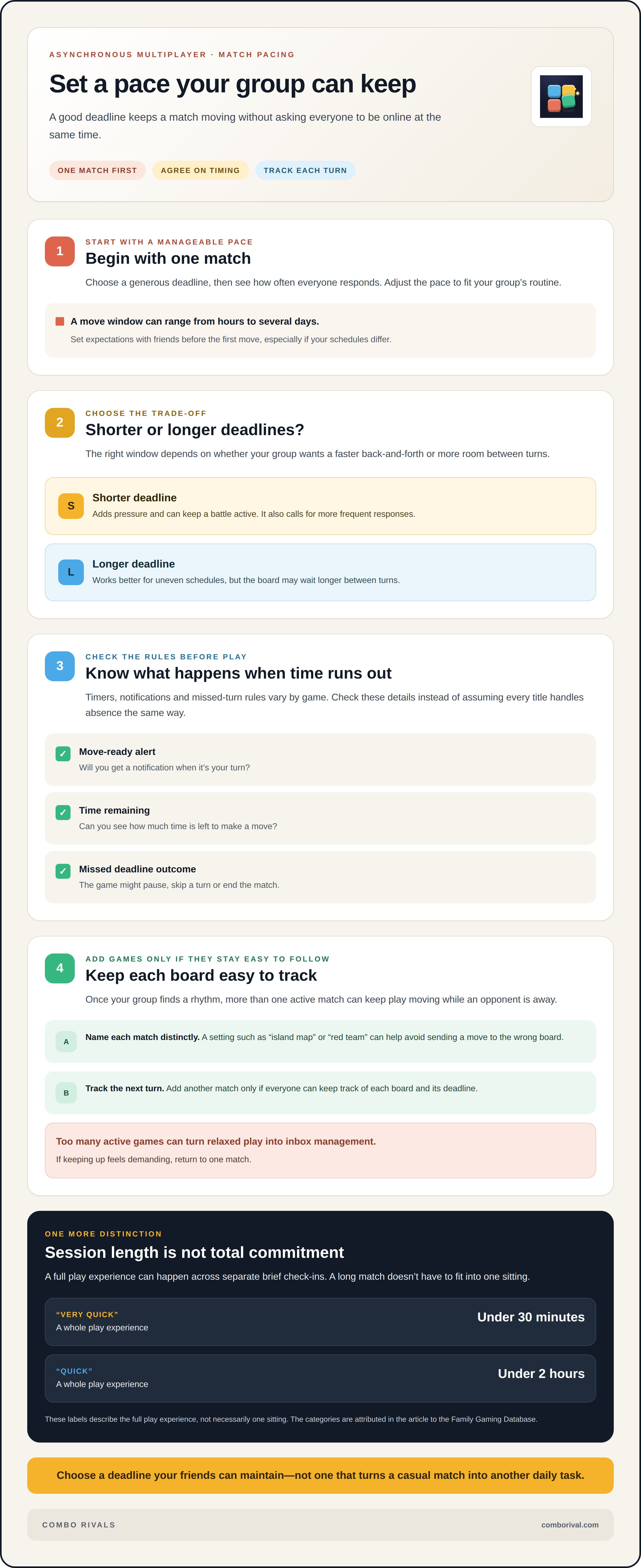
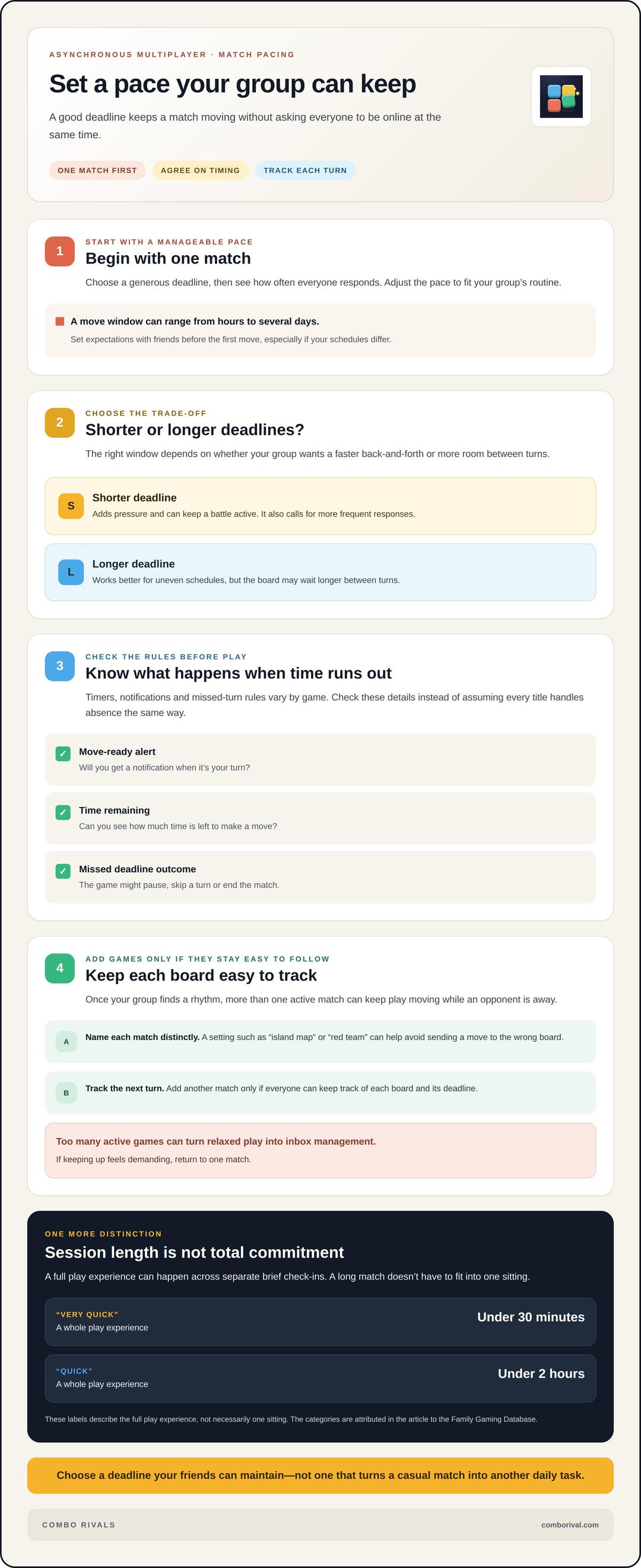
Session length and total commitment aren’t the same. According to the Family Gaming Database, “very quick” games take under 30 minutes to play, while “quick” games take under 2 hours. Those categories describe a whole play experience, not necessarily one sitting. In an asynchronous board game, you may spend a short burst making a move, then return later. A long match can still fit brief check-ins if its turns stay manageable.
Set the pace before starting a match with friends. Begin with one game and a generous deadline, then see how often everyone responds. A game may give each player a set window for each move, from hours to several days. Shorter deadlines add pressure and keep a battle active. Longer ones suit uneven schedules but can leave the board waiting between turns.
Timers, notifications, and rules for missed turns vary by game. Check whether you’ll get an alert when a move is ready, how much time remains, and what happens when a deadline passes. The game might pause, skip a turn, or end the match, so don’t assume every title handles absence the same way. Agree on expectations with friends before the first move.
You can look for games without ads, pay-to-win mechanics, or daily-login pressure. Read the game’s ad and purchase details, then check whether progress or competitive access depends on logging in every day. Optional cosmetics are different from purchases that affect match outcomes. That distinction matters more than a flashy store screen.
Once your group has a steady routine, a few active matches can keep play moving while an opponent is away. Add another only if everyone can track each board and its deadline. If that feels demanding, return to one match. The right setup is one your friends can maintain without turning a casual challenge into another daily task.
A game’s overall play experience may be under 30 minutes or under 2 hours, but that doesn’t mean it must be played in one sitting. Asynchronous matches can involve brief check-ins over a longer period; shorter turn deadlines require more frequent responses, while longer deadlines accommodate uneven schedules but may slow the match.
4. How asynchronous multiplayer works
In an asynchronous match, you make a move and send it to your friend over the internet. They respond later, so you don’t need to be online together, and the game can continue across separate sessions. In chess, for example, you select and submit a move, then wait for your turn again. The shared board gives both players a clear place to pick up.
The basic loop is simple: open the match, review the current position, choose an action, and submit it. A strategy game might ask you to move a unit or manage a resource; a board game might ask you to place a tile. Your choices shape what the next player sees, so check the board before sending a move.
Each game sets its own rules for turn order, deadlines, and match completion. Read them before you start. A fixed move window gives both players structure, while a game without a strict deadline may suit friends with changing schedules. If the rules feel difficult to follow, try a simpler mode before committing to a long match.
Platform matters too. A game’s mobile, PC, or console version may offer different ways to join and play. Don’t assume that players on separate platforms can share a match. Choose a title that supports your group’s devices, then confirm everyone can enter the same game. That small step can prevent a challenge from stalling before the first turn.
Asynchronous play still needs an internet connection to send moves, but it doesn’t require everyone to connect at once. That makes it a different fit from a Live duel, where players compete in real time. Want to put turn-by-turn competition into practice? Challenge a friend in a block puzzle match.
Combo Rival: Combo Rivals: Block Puzzle
Combo Rival is a natural fit if you want quick block puzzle competition with a friend. Combo Rivals: Block Puzzle lets you play friend duels live or anytime, plus voice. Choose a live match when you’re both ready to compete. Pick an anytime duel when coordinating schedules is harder.
Each player in a match or challenge gets the same Shared piece sequence and starts with an identical board. That gives both sides the same setup, so your placement choices drive the contest. For a solo challenge against a shared daily board, try the Daily puzzle challenge.
Pick the mode that fits your schedule and focus on your next move. Try a friend duel in Combo Rival for a block puzzle match you can play live or anytime.
Pick your pace, then make the next move
Your next game should suit the way you want to connect, not dictate your calendar. Decide whether you want a quiet rivalry that unfolds around other plans or a quick contest to share with a friend. Use that choice to compare asynchronous multiplayer games for busy people: look for a rhythm you’ll enjoy returning to, not a streak you’ll feel pressured to maintain.
Keep your first match simple. Choose one opponent, agree on the mood, and see whether the back-and-forth fits your routine. If it clicks, make the next challenge sharper. If your schedule changes, adjust the pace instead of forcing a daily habit. The best match is one both players want to continue.
Combo Rival’s team brings its game-making focus to friendly competition. Contact Combo Rival about your game, then get ready to make your next move.
Frequently Asked Questions
Which should you play?
Choose a game your group will enjoy returning to. If everyone likes planning, pick a strategy game with meaningful decisions; if they want a lighter contest, choose a compact puzzle or board game. Ask your friends what they want from the match before starting. A shared goal, such as relaxed play or close competition, makes it easier to settle on a title.
What are the best asynchronous multiplayer games for busy people in 2026?
The best choice depends on your group’s preferred genre and devices. Look for a title that supports the platforms your friends use and makes it easy to follow whose turn comes next. Before committing, try a sample match together. You’ll quickly see whether its interface, pace, and level of strategy suit the way your group likes to play.
What are the best turn-based games that let players take turns over hours or days?
Look for games with persistent matches and decisions that are easy to follow after a break. A chess-style game rewards careful moves, while turn-based tactics focus on positioning and objectives. For a longer campaign, choose a strategy title that carries progress across sessions. Your group’s appetite for planning matters more than the genre label.
What features should you look for in an asynchronous multiplayer game?
Look for games with clear match rules, easy-to-follow turns, and features that suit your group. Check whether you can join matches or access the modes you want. Then decide which optional features matter to your group. You can enjoy a competitive game without treating add-ons as essential.
How can a group set up a private asynchronous game and invite friends?
First, choose a game that supports private matches and works on everyone’s device. Have one person create the room and share its invitation through the game. Ask each friend to confirm they’ve joined the right lobby before starting. A dedicated group chat can keep match updates separate from other conversations, making coordination easier between sessions.
How do popular asynchronous multiplayer games compare in session length and required time commitment?
The Family Gaming Database classifies “very quick” games as taking under 30 minutes and “quick” games as taking under 2 hours; these describe the whole play experience, not necessarily one sitting. Asynchronous games can be played in brief check-ins over a longer period, with move deadlines of hours or several days shaping how often you need to respond.