All posts · 9 min read
Live Block Puzzle Duels for Friends in Private Rooms
Join a live block puzzle duel with friends: learn the rules, manage the clock, use smart placement tactics, and set up a private 1v1 room or anytime match.
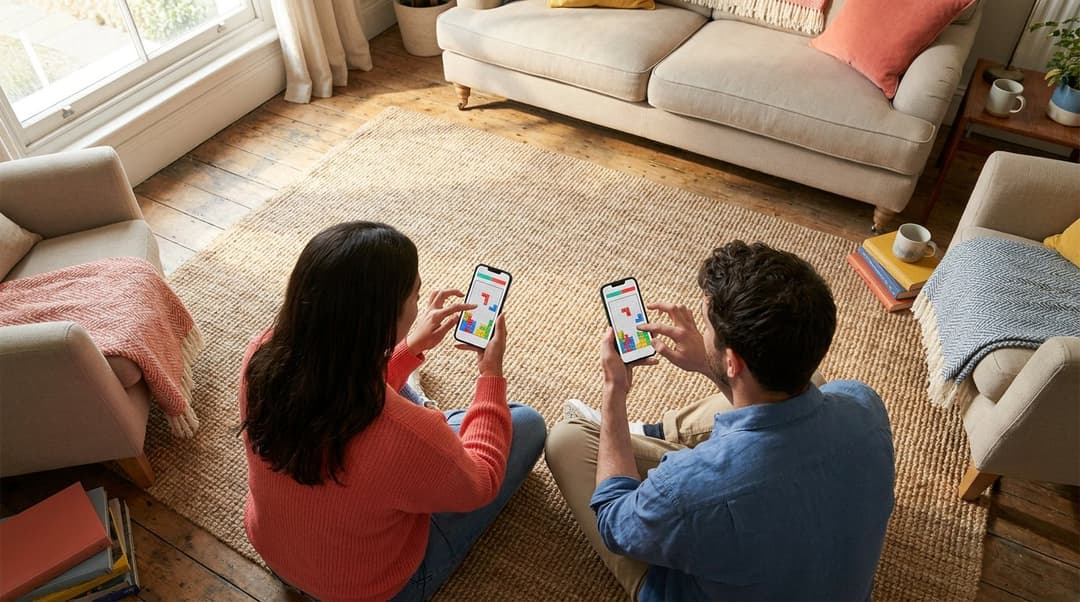
The board is only half the challenge. In a live block puzzle duel, each placement must work for your board while the clock and match rules set the pace. Quick hands help, but smart placements matter more.
A head-to-head match adds pressure that solo play doesn’t. You’re reading shapes, managing space, and deciding whether to make a safe move or set up a stronger board. With friends, voice chat brings the rivalry to life. Choose a live match or an anytime duel to suit your plans.
This guide explains how a live match works, how clocks and move limits shape your decisions, and how to set up a private room and invite a friend. You’ll see what to consider for a fair, focused duel, whether you’re playing in real time or fitting a match around your schedule. Here are the rules, tactics, and steps to get started.
Key Takeaways
- Learn how block placement and board space shape a head-to-head match.
- See how the Rush Duel’s 2-minute-30-second clock sets the pace and scoring stakes.
- Use a private room code to set up a 1v1 with a friend.
- Choose between playing live or fitting an anytime duel around your schedule.
Table of Contents
- Block puzzle gameplay
- Match duration and move time limits
- Private rooms and friend invites
- How do you start and join a live block puzzle duel?
- Combo Rival: Friend duels: live and anytime 1v1 block puzzle matches with voice
Block puzzle gameplay
In a live block puzzle duel, players place shapes on separate boards during the same match. The basic challenge is to fit each piece without blocking your next move. A narrow gap, for example, may suit a straight block, while a larger piece can fill open space. Line-clearing rules vary, so follow the instructions shown in the game to see which placements score.
Think one piece ahead. Clearing a line now can still leave awkward gaps for later shapes. Keep flexible space open when possible, and check how a new piece fits before placing it. If your board is nearly full, a small clear may be safer than a risky setup. The game’s rules determine scoring, not speed alone.
A live match is real-time multiplayer: both players make moves during the same match. In turn-based play, one player acts before the other takes a turn. The distinction changes how you play. In real time, balance quick decisions with board control; in turn-based play, you can respond after seeing your opponent’s move.
No. A live match doesn’t automatically involve cash prizes or paid entry. Those depend on the game’s rules. Read the match terms before joining, and don’t assume money is involved just because another player is on screen.
Use a compatible mobile device and an internet connection. Live play relies on both players’ moves reaching the match, so a stable connection helps keep the action in sync. If a move seems delayed, pause before tapping again. Repeated inputs can make a crowded board harder to read.
A live label alone doesn’t prove that a match is safe or fair. Clear rules, visible scoring, and consistent conditions help players understand how results are decided. Keep personal details out of chat, use voice features thoughtfully, and judge the contest by its stated rules. Skill shows in your placements, and a fair format lets them count.
Match duration and move time limits
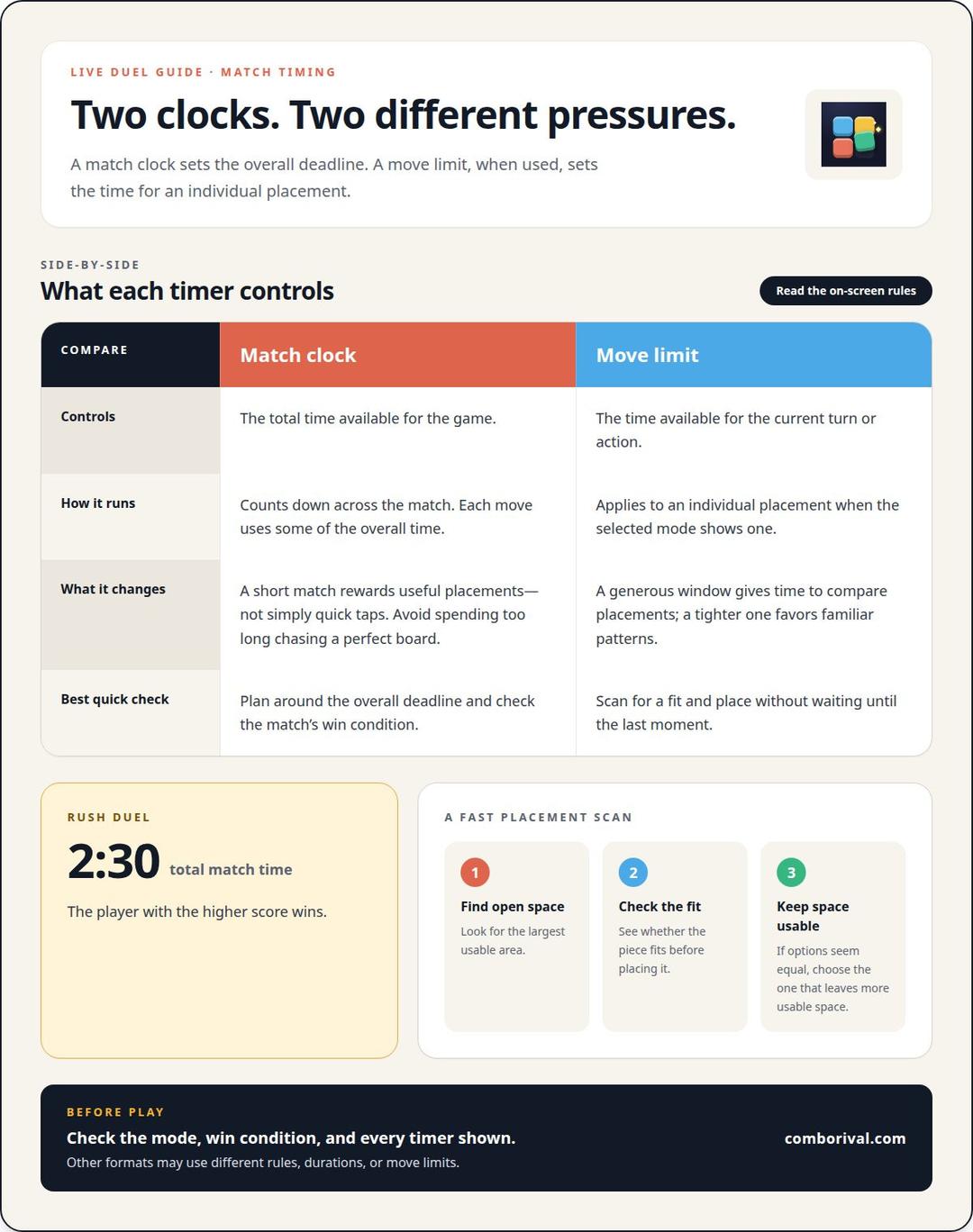
A match clock and a move clock control different pressures. The match clock sets the total time available; a move limit, when a mode uses one, restricts time for an individual placement. A Rush Duel lasts 2 minutes and 30 seconds, and the player with the higher score wins. That fixed window rewards useful placements, not simply quick taps.
In a short match, don’t spend too long chasing a perfect board. Check the pieces, find a placement that keeps space usable, and commit. A safe line clear, for example, may preserve your options better than a risky move with a higher potential score. The countdown changes the value of each decision: a move that takes too long uses match time.
Don’t confuse a match duration with a per-move limit. The match clock counts down across the game. A move limit, if shown, applies to the current turn or action. Check the on-screen timer before play begins. If there’s only a match clock, plan around the overall deadline. If there’s also a move countdown, place each piece without waiting until the last moment.
Move limits affect strategy differently. A generous window gives you time to compare placements; a tighter one favors familiar patterns. Scan quickly: find the largest open area, check whether a piece fits, then place it. If two options seem equal, choose the move that leaves more usable space. This simple rule can reduce hesitation without encouraging careless taps.
Before a timed match, check the win condition and both clocks. The Rush Duel result is decided by the higher score, while other formats may use different rules. Don’t assume every live match has the same duration or move limit. Friend duels offer live and anytime formats, so use the selected mode’s displayed rules to guide your pace.
Private rooms and friend invites
A private room gives two friends a direct route into a 1v1 match. One player creates the room, then shares its code. The other joins with that code. No public matchmaking queue is needed for this head-to-head setup. The room code connects the invite to the intended match, so copy it accurately before sending.
Keep setup simple. Open the private-room option, create a room, and send its code to your friend through a channel you already use. Your friend enters the code to join. Once you’re both in, confirm you’re facing the right person before starting. If joining fails, compare the code for typos.
- Create a private room from the game’s match options.
- Share the room code directly with your friend.
- Have your friend enter that code and join the 1v1 room.
- Confirm the opponent, then begin the match.
If your friend is ready now, choose a live room for an immediate match. If your schedules don’t line up, an anytime duel lets you play later. The room code controls access; the mode determines when you play. Voice chat adds conversation to a friend match, but placements and score still decide the contest.
Private play works best when you keep the invite focused. Send the code to the friend you want to challenge, rather than posting it in a public chat. Before starting, agree on the format and make sure you’re both ready. A brief pause can prevent the match from starting while someone is still joining or choosing a mode.
A private room is built for a direct contest, not a crowd. Use the code to bring one friend into the 1v1, then let the match rules take over. If the code doesn’t work, return to the room screen and create or enter it again rather than guessing at characters.
How do you start and join a live block puzzle duel?
Start by choosing a live 1v1 mode, then decide whether you’re matching with a friend or joining a game. For a private match, one player creates a room and shares its code. The other enters that code to join. A room code is the direct route into the intended head-to-head match.
- Open the game’s duel or multiplayer options.
- Choose a live 1v1 match or the private-room option.
- Create a room if you’re hosting, then share its code.
- Enter your friend’s code if you’re joining their room.
- Confirm the opponent and start when both players are ready.
Before play, check the mode name and the rules on screen. In a live match, both players compete during the same session. An anytime match suits friends who can’t play together right away. Don’t assume the two formats share a clock or scoring rules; follow the selected mode’s instructions.
If a code doesn’t work, compare each character with the host’s message. Make sure you’re entering it in the room-joining option, not a general match search. If the host has left the room, ask them to create another and send its current code. Keep private invites out of public chats.
Once the match begins, focus on your board. Check each piece, choose a workable placement, and leave room for the next move. Voice chat can make a friend duel more social, but the game’s scoring rules still apply. Start with the right opponent and mode, then play.
Ready to put the steps into action? Start a live friend duel and meet your opponent on the board.
Combo Rival: Friend duels: live and anytime 1v1 block puzzle matches with voice
Combo Rival turns solo puzzle play into a head-to-head match with a friend. Choose a live duel when you’re both ready, or an anytime match when your schedules don’t line up. Voice chat adds conversation, while each player makes their own moves and competes for the higher score.
For a private challenge, create a room and share its code so your friend can join the 1v1. Prefer a solo warm-up first? Combo Rival is a free mobile game, and the Daily puzzle challenge offers another way to play outside a duel.
Pick the format that fits the moment. Go live for immediate rivalry; choose anytime play when you want more flexibility. Contact Combo Rival if you have a question about playing with friends.
Put Your Next Match in Motion
Make your next live block puzzle duel about more than the final score. Choose one decision to improve, such as leaving open space for awkward pieces or avoiding a placement that blocks useful options. Keep that focus throughout the match. Afterward, notice which choices helped and which left you stuck. That gives your next round a clear purpose without turning a friendly rivalry into homework.
Bring the same mindset to the room setup. Decide whether you want immediate competition or a match that fits another time, then invite the friend who’ll make the board interesting. A good duel is focused, friendly, and ready for a rematch.
Want to ask something before your next challenge? Contact Combo Rival about duels. Then pick your move, trust your read, and enjoy the contest.
Frequently Asked Questions
What is a live block puzzle duel?
A live block-puzzle duel is a real-time contest where two players solve block puzzles during the same match. Each player manages a separate board, while the shared session brings the rivalry into the moment. In Combo Rival, friend duels also include voice chat, so you can talk while choosing placements and reacting to the score.
Which apps or websites offer live block puzzle duels?
Combo Rivals: Block Puzzle is a mobile game with friend duels, including live 1v1 matches. It also offers anytime duels, giving friends another way to play when they aren’t available simultaneously. Choose the live format for a shared session, or pick anytime play when flexibility matters more than being online together.
What are the rules and scoring in a live block puzzle duel?
Rules depend on the selected mode. In a Rush Duel, the match lasts 2 minutes and 30 seconds, and the higher score wins. Other modes can use different conditions, so the displayed match rules matter. Before playing, look for the win condition and scoring details, then shape your placements around what the mode rewards.
Can you play live block puzzle duels for free?
Combo Rivals: Block Puzzle is a free-to-play mobile game with friend duels. Optional in-app purchases include a premium Season Pass track, coin packs, and booster packs. Free-to-play describes access to the game, not every available item. Review the in-game purchase details before choosing paid content.