All posts · Updated · 9 min read
Battle pass progression tips for casual games that fit your routine
Battle pass progression tips for casual games: pace the season deadline, pick rewards you want, and fit challenges around your routine without daily logins.
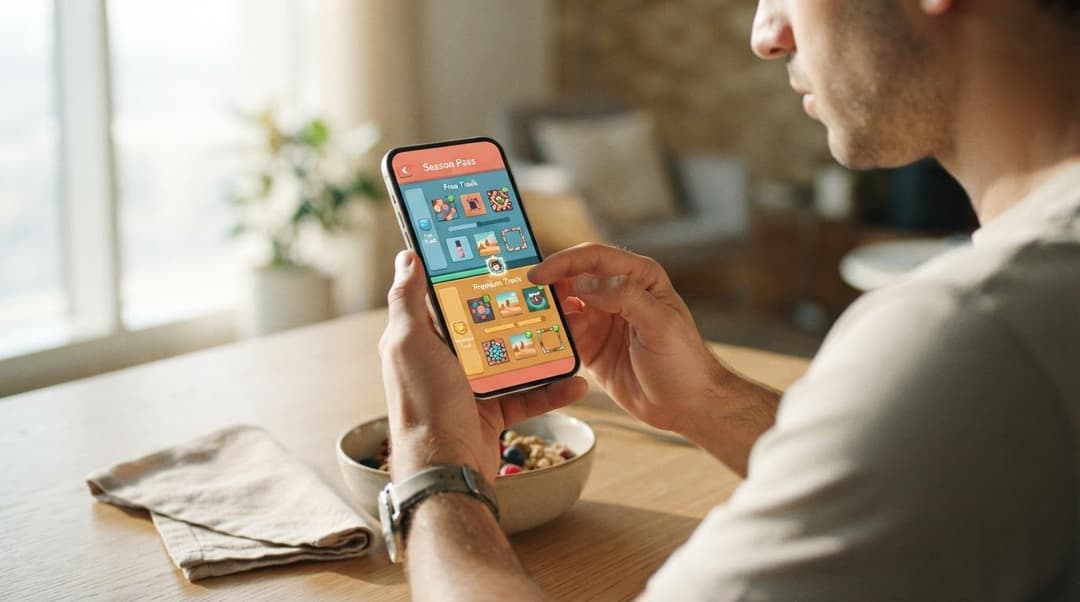
The best battle pass progression tips for casual games are straightforward: pace your play around the season deadline, prioritize rewards you actually want, and choose challenges that fit your routine. Season lengths vary, so a few regular sessions may be more manageable than a last-minute grind.
You shouldn’t need to log in every day or reshape your schedule to keep up. Check how the pass tracks progress and whether challenges remain available throughout the week. Then choose a rhythm that suits how you play. A quick mobile session calls for a different plan than a longer session on PC or console.
This guide explains how season length, reward design, play style, and platform can affect your progress. Use these tips to set a realistic pace, focus your playtime on useful tasks, and enjoy the game without turning the pass into a second job.
Key Takeaways
- Match daily, weekly, and seasonal challenges to the time you actually have, then plan around the season deadline.
- Judge a pass by the rewards you want and the progress you can earn; optional purchases aren’t required to play.
- Check which activities count toward pass progress before you build your routine around casual, co-op, or private matches.
- Before deleting an account, consider what could happen to its saved progress. For a casual puzzle break, explore Combo Rival’s Daily puzzle challenge and friend duels.
Table of Contents
- Battle pass structure and season length
- Cosmetic rewards and pay-to-win risks
- Battle passes for different player types
- Can battle pass progress be earned in casual, co-op, or private matches?
- Account deletion and your progress
- Combo Rival and live duels
Battle pass structure and season length
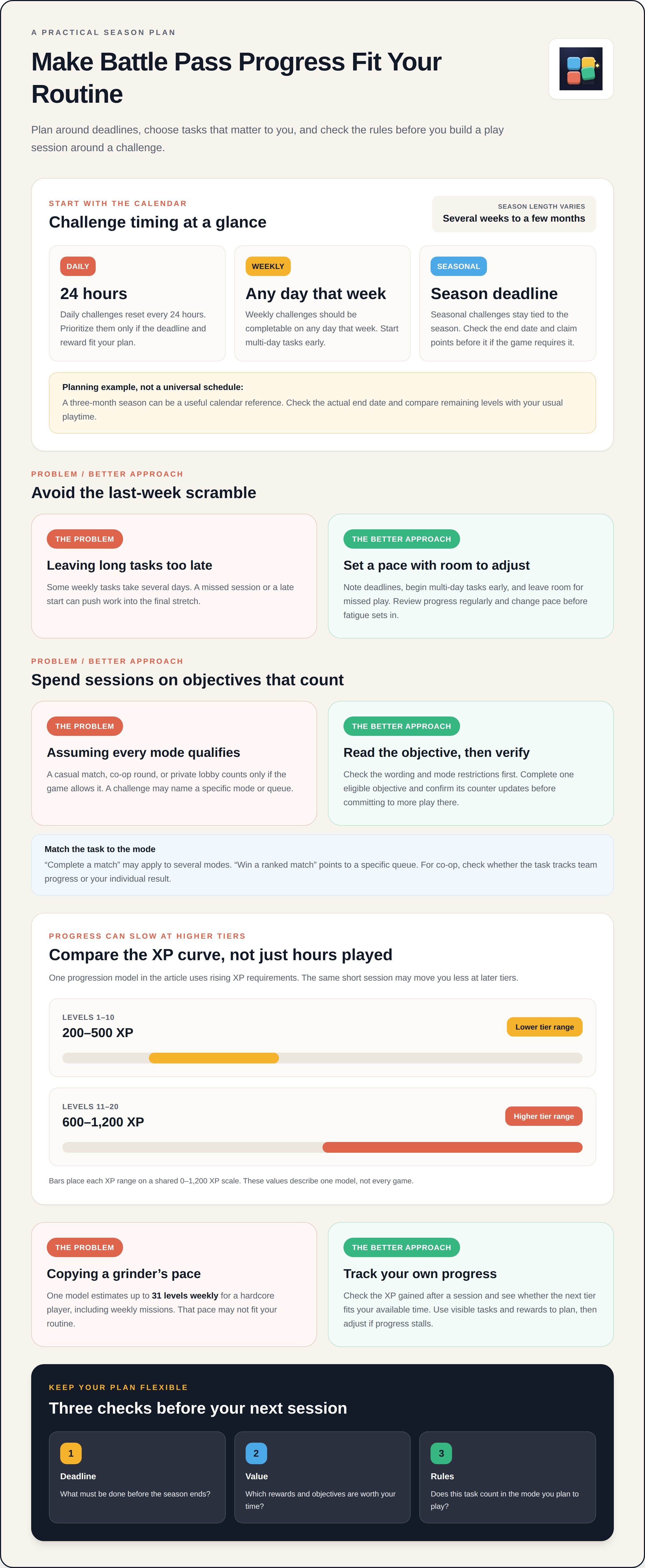
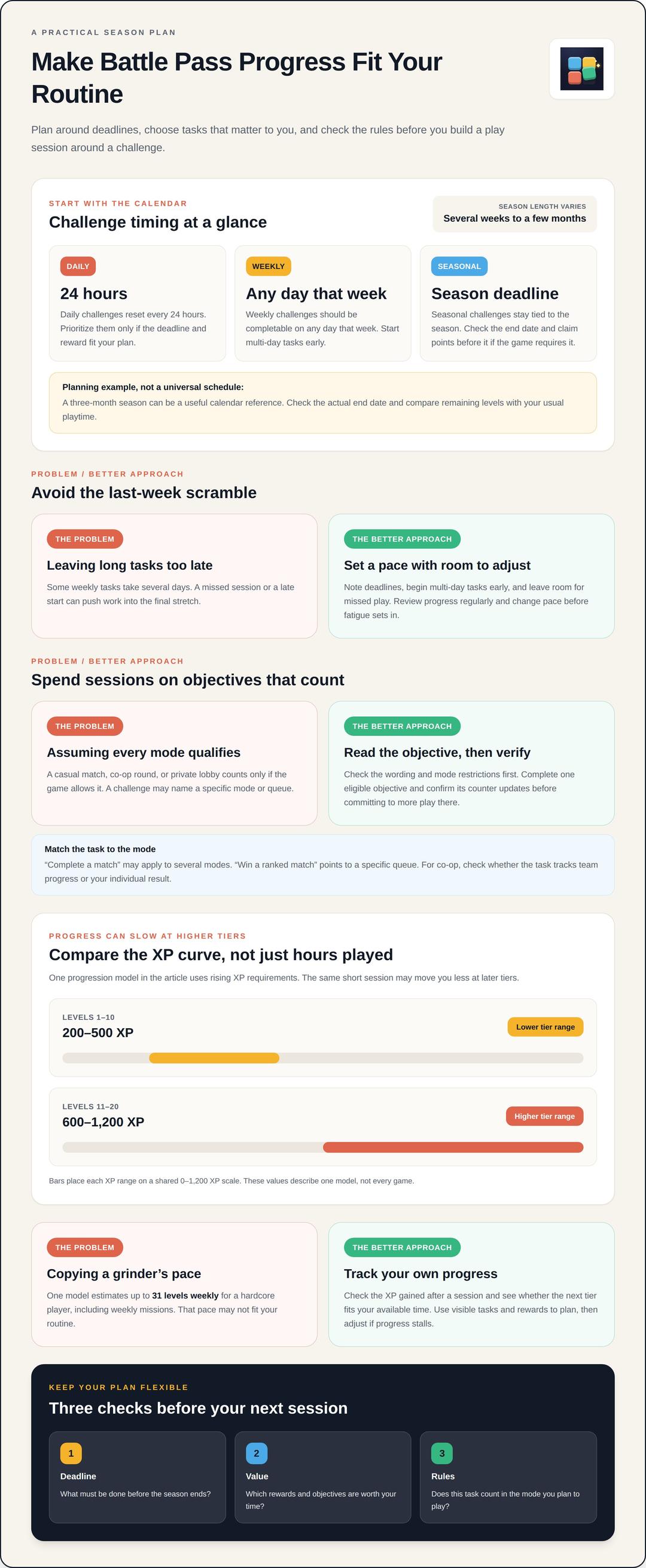
Battle pass seasons commonly run from several weeks to a few months. A three-month season is a planning example, not a universal schedule. Check the end date first, then compare remaining levels with your usual playtime.
Daily challenges reset every 24 hours, while weekly challenges should be completable on any day that week. Some weekly tasks take several days, so start those early. Seasonal challenges stay tied to the season. Prioritize limited-time tasks by deadline, desired reward, and whether one activity advances several objectives.
Treat stored season points as a buffer, not a guarantee that they will carry over. If a game has a piggy bank, read its claim and reset rules before relying on it. A pass typically closes with its season, and whether unused points transfer depends on the game’s rules. Claim points before the deadline if the game requires it.
Plan seasonal content around your calendar, not the other way around. Note challenge deadlines, set aside a short session for multi-day tasks, and leave room for missed play. This can prevent a final-week grind. When seasonal content changes, compare new objectives with unfinished tasks and skip low-value work. Review your progress regularly and adjust your pace before fatigue sets in. The pass should fit your routine, not drain it.
A season can pair its theme with a short trailer, new challenges and ideally a gameplay update; clear progress and stable rules help players plan.
Cosmetic rewards and pay-to-win risks
Start with the free track. Check which rewards are available through regular play, then compare them with the premium track’s extras. A cosmetic skin changes appearance, not match strength. If a premium reward affects damage, speed, or scoring, it can make access to paid rewards part of the competitive advantage. Fair pass design keeps gameplay power out of paid tiers.
Event-specific rewards come with a deadline. Before pursuing an event challenge, check its end date, task requirements, and reward details. A themed frame may be worth a few focused sessions, while a reward you won’t use may not be. Pick tasks that suit your routine rather than letting a limited-time badge dictate every session.
Some games offer a season pass alongside a separate event pass, with different tracks or reward tiers. Don’t assume progress in one advances the other. Read the objectives and reward screens first. If the passes require different modes, focus on the one with rewards you value most, or skip the extra grind.
When deciding whether to buy a pass, list the specific cosmetics you want and check which track includes them. Consider the play required to unlock them, not just tier names or flashy previews. Would you still enjoy the game without the extra rewards? A pass should offer optional style, not pressure you to play constantly or make purchases feel necessary to compete.
Battle passes for different player types
Your pace depends on the pass’s XP curve, not just hours logged. Compare points needed across early and later tiers. One model lists 200-500 XP for levels 1-10, then 600-1,200 XP for levels 11-20. Rising thresholds mean the same short session may move you less later.
Use battle pass progression tips for casual games to check progress against your weekly routine. Note the XP gained after each session and estimate whether the next tier fits your schedule. Don’t copy a grinder’s pace. One model estimates up to 31 levels weekly for a hardcore player, including weekly missions.
Clear mechanics make it easier to plan. An XP bar, specific task requirements, and visible tier rewards help you see what advances your progress. If a task counts only in a particular mode, check that before spending a session on it. Use battle pass progression tips for casual games to plan around clear rules instead of guesswork.
Retention depends on goals that feel reachable without daily pressure. Compare completion patterns for regular players and lighter users, then set milestones around sessions they already play. A pass can pair a match goal with a longer-term milestone, offering a quick win and a reason to return. If progress stalls, adjust your pace instead of treating missed play as failure.
Can battle pass progress be earned in casual, co-op, or private matches?
A casual match, co-op round, or private lobby counts toward pass progress only if the game allows it. Read the challenge wording first. “Complete a match” may apply to several modes, while “win a ranked match” points to a specific queue. Battle pass progression tips for casual games start with spotting that difference before you play.
For co-op challenges, check whether the objective tracks team tasks or individual actions. A stage-clear goal may suit a team round, while a personal score target depends on your own result. Review mode restrictions, then choose a session that matches the listed goal. Don’t assume every co-op activity qualifies.
Private lobbies may count for friend challenges, but progress rules vary. Look for labels such as “custom match excluded” or a named eligible playlist. If the pass doesn’t specify a mode, choose one named in the challenge rather than planning around an assumption. That way, a friendly rematch is less likely to feel like wasted effort.
When trying a new mode, complete one eligible objective and check whether its counter updates. Then decide whether to keep playing there or switch modes. Battle pass progression tips for casual games work best when you match missions to your preferred play, not the other way around. A casual round can fit your routine, but the challenge rules determine whether it advances the pass.
Account deletion and your progress
Before deleting a game account, distinguish account removal from uninstalling the app. Removing an app from your device doesn’t necessarily delete its account. Open the game’s account settings and read each deletion prompt before confirming. Check which sign-in method is linked to your profile, such as an email login or platform account, so you know which account the prompt concerns.
Review your pass progress first. Note your current tier, unfinished challenges, unclaimed rewards, and any stored season points. If progress or items are tied to the account, deleting it may remove your access to them. Don’t assume a new account will restore an old pass. A screenshot can help you keep a record, but it won’t transfer rewards or restore an account.
Decide only after reading the deletion notice. Check what data and progress will be affected, whether the notice describes a waiting period, and whether it says deletion can be reversed. If you only need a break, logging out or uninstalling may be more suitable than permanent deletion. If you proceed, complete the in-game steps and save any confirmation shown. Account deletion is separate from a season rollover: a new season doesn’t mean your account or previous progress has been deleted.
Combo Rival and live duels
Combo Rival is a free-to-download mobile block puzzle game with solo play and friend duels. Its season pass has free and premium tracks, so you can play without buying the premium track. Review the rewards and choose a pace that suits your routine.
Want a head-to-head test? Start a live or anytime 1v1 friend duel. Voice chat is optional, off by default, and can be muted. In a match or challenge, both players start with identical boards and receive a Shared piece sequence. That shared setup keeps the contest focused on how you place each piece, not on who gets an easier run.
For a short session, try Combo Rival’s Daily puzzle. It offers a puzzle to solve without scheduling a live match. Choose it for a focused break, or challenge a friend when you’re both ready to play. Each option suits a different routine, without making every session a race for pass progress.
That mix makes Combo Rival a practical next step if you want casual block puzzles with optional competition and a pass to follow. Play at your own pace, compare scores with a friend, and keep the match friendly or fierce. The team’s expertise in block puzzles helps shape the experience. If you have questions about the game or its season pass, contact Combo Rival.
Frequently Asked Questions
What are the fastest ways to earn battle pass XP in casual games?
Prioritize activities that award XP and fit your usual play. Before starting, check whether the pass rewards match completion, specific actions, or both. In a puzzle game, for example, one task might count completed rounds while another tracks clears. Choose a session that advances both, then check your XP total afterward. This gives you a practical baseline for planning the next session.
How much playtime per day is typically needed to finish a battle pass?
There’s no universal daily playtime target. One progression estimate uses 60 minutes per day for an average player, but that’s an assumption in its model, not a requirement for every game. Your pace depends on season length, XP earned per activity, and remaining tiers. Track your level after a few sessions, then adjust your routine to the pass in front of you.
Which daily and weekly missions give the most battle pass progress?
Choose missions with the best listed XP reward for the effort involved. A weekly mission example awards an average of 200 XP, but mission values vary by game. Compare the XP shown with the completion steps before choosing a task. If a mission requires a mode you rarely play, a lower-reward task in your usual mode may fit your schedule better.
How do free and premium battle pass rewards and progression compare?
Free and premium labels describe reward access, but they don’t tell you how XP works. Read the pass screen for the progression rules, including whether both tracks advance through the same activities. Then check which rewards you can claim at your current tier. This separates the way you level from the items attached to each track, so you can decide based on the game’s actual setup.
What happens to unfinished battle pass rewards when a season ends?
Unclaimed rewards may be treated differently from rewards you have unlocked or only partly progressed toward. Before the season ends, review the reward screen and note which items are ready to claim. Save a screenshot of claimed rewards if you want a simple record. Afterward, check your in-game inventory for the items rather than relying only on the pass screen.